Share to WeChat
×
 The browser's built-in sharing function is also very user-friendly~
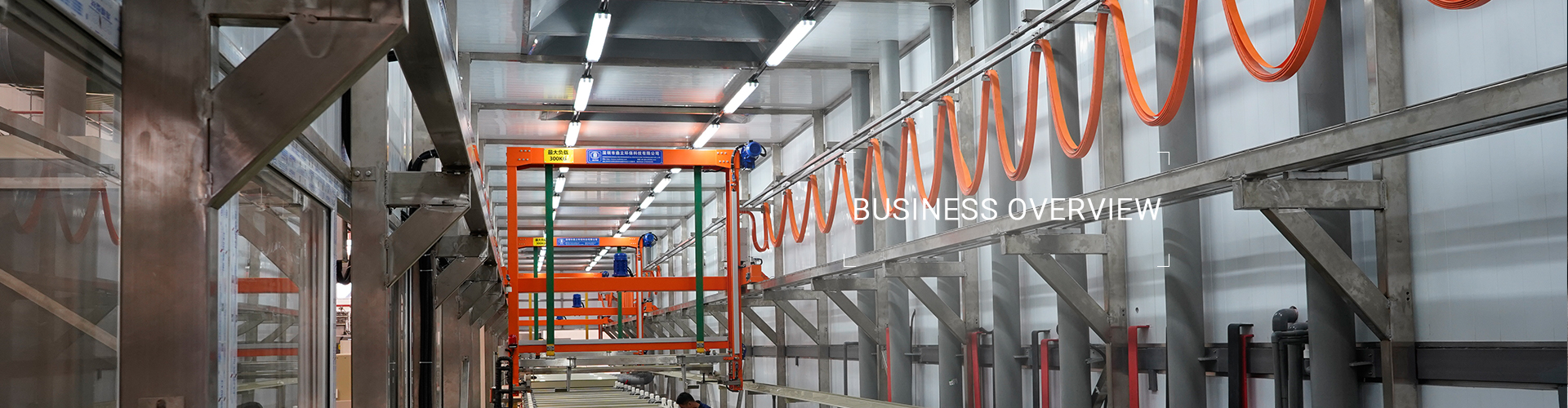
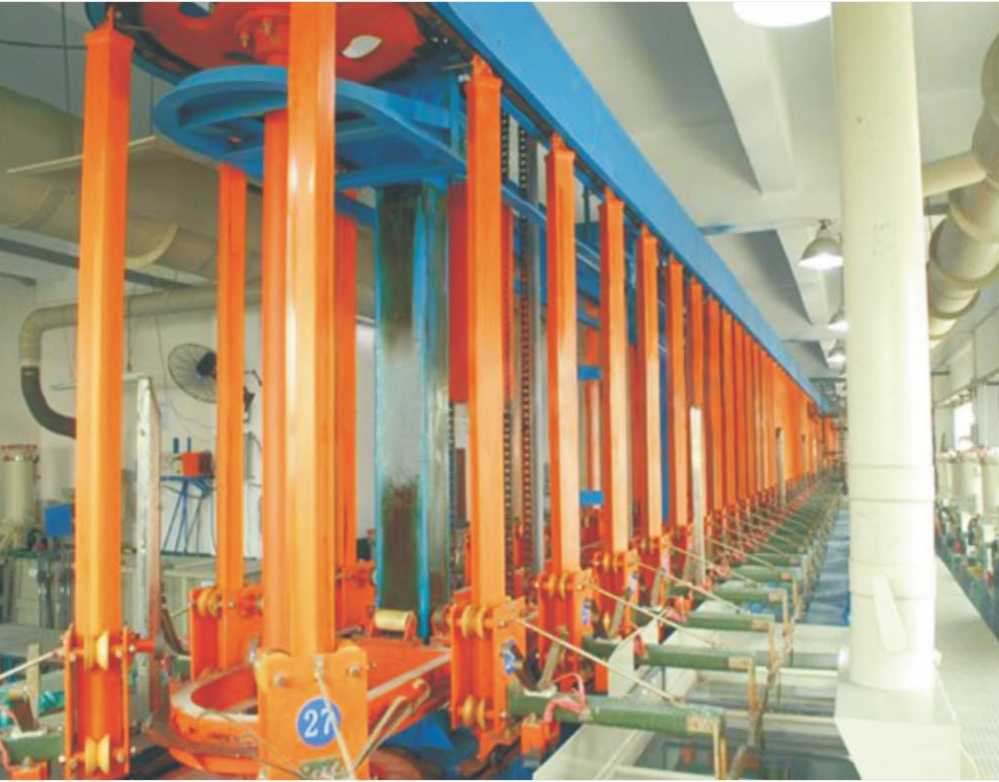
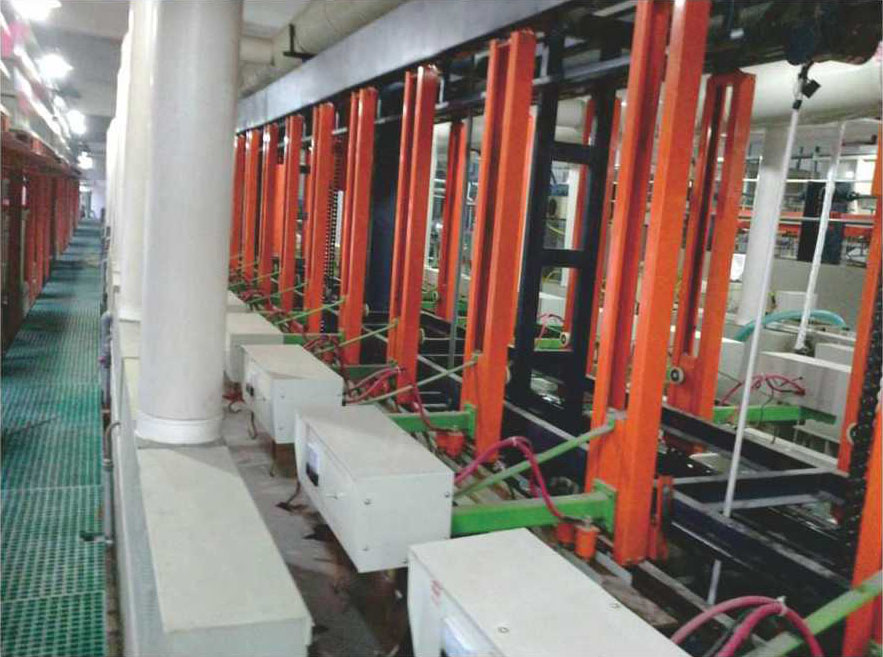
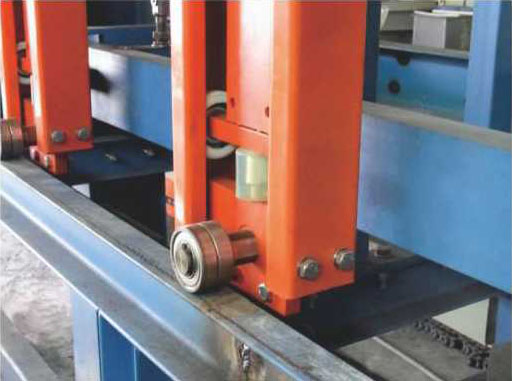
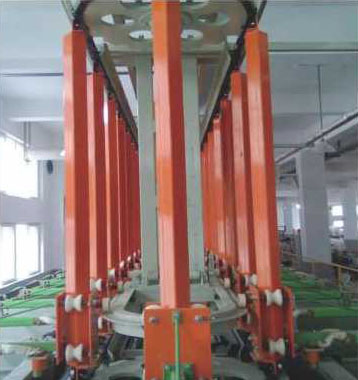
In the large-scale electroplating of standardized small workpieces, the efficiency limits of traditional linear lines—due to frequent acceleration, deceleration, direction changes, and empty return trips of hoists—have become increasingly apparent. The Dingli Technology Fully Automatic Circular Electroplating Production Line innovates at the level of physical process topology. Its circular closed-track design fundamentally eliminates idle waiting time, ushering electroplating production into a seamless cyclic flow mode optimized for production cycles measured in seconds. The core of the system lies in its precise circular synchronous transfer mechanism. All process tanks (e.g., degreasing, pickling, nickel plating, gold plating, recovery, drying) are arranged compactly in a radial pattern around a central rotary table. A high-speed, precision central rotary hoist drives multiple evenly distributed lifting arms in synchronized motion. Each arm carries a rack and, like the hand of a clock, pauses precisely at each station according to the preset program, performs the dip/lift/rotate action, and then indexes to the next station. This mechanical synchronous drive guarantees absolute cycle consistency. The production rhythm is solely determined by the rotation speed of the central mechanism, allowing theoretical capacity to be calculated precisely and maximized. Superior space intensification and process compactness are inherent advantages of the circular design. All process steps are integrated within a compact circle centered on the rotary table, occupying significantly less floor space than a linear line of equivalent capacity. This layout not only conserves valuable plant space but also, due to the minimal distance between tanks, drastically reduces cross-contamination from drip carryover and drag-out loss. This improves chemical utilization and lessens wastewater treatment load. Furthermore, the closed-loop path allows for easy integration of multi-stage recovery and rinsing units, meeting demands for high-standard clean production and precious metal recovery. At the level of automation and process control, the circular design simplifies complexity. Since the material flow follows a single-direction, constant-cycle loop, its control logic is more straightforward and reliable than systems requiring coordinated scheduling of multiple hoists. The central control system primarily manages one main drive and the process parameters (temperature, current, time) of individual tanks. This simplified control architecture leads to higher system stability and lower failure rates. Meanwhile, operators only need to work at fixed loading and unloading stations, resulting in a more centralized and safer work environment. In summary, the Dingli Technology Fully Automatic Circular Electroplating Production Line represents an engineering philosophy born for ultimate efficiency. Through its ingenious circular physical layout, it maximizes continuity, compactness, and synchrony. It is particularly suited for manufacturing scenarios with single-product types, enormous batch sizes, and extreme requirements for production rhythm and cost control. Choosing this line means opting for a highly deterministic, almost “law-of-physics” level of stable and reliable mass production methodology.
Fully automatic circular electroplating production line
Share to WeChat
× The browser's built-in sharing function is also very user-friendly~
In the large-scale electroplating of standardized small workpieces, the efficiency limits of traditional linear lines—due to frequent acceleration, deceleration, direction changes, and empty return trips of hoists—have become increasingly apparent. The Dingli Technology Fully Automatic Circular Electroplating Production Line innovates at the level of physical process topology. Its circular closed-track design fundamentally eliminates idle waiting time, ushering electroplating production into a seamless cyclic flow mode optimized for production cycles measured in seconds. The core of the system lies in its precise circular synchronous transfer mechanism. All process tanks (e.g., degreasing, pickling, nickel plating, gold plating, recovery, drying) are arranged compactly in a radial pattern around a central rotary table. A high-speed, precision central rotary hoist drives multiple evenly distributed lifting arms in synchronized motion. Each arm carries a rack and, like the hand of a clock, pauses precisely at each station according to the preset program, performs the dip/lift/rotate action, and then indexes to the next station. This mechanical synchronous drive guarantees absolute cycle consistency. The production rhythm is solely determined by the rotation speed of the central mechanism, allowing theoretical capacity to be calculated precisely and maximized. Superior space intensification and process compactness are inherent advantages of the circular design. All process steps are integrated within a compact circle centered on the rotary table, occupying significantly less floor space than a linear line of equivalent capacity. This layout not only conserves valuable plant space but also, due to the minimal distance between tanks, drastically reduces cross-contamination from drip carryover and drag-out loss. This improves chemical utilization and lessens wastewater treatment load. Furthermore, the closed-loop path allows for easy integration of multi-stage recovery and rinsing units, meeting demands for high-standard clean production and precious metal recovery. At the level of automation and process control, the circular design simplifies complexity. Since the material flow follows a single-direction, constant-cycle loop, its control logic is more straightforward and reliable than systems requiring coordinated scheduling of multiple hoists. The central control system primarily manages one main drive and the process parameters (temperature, current, time) of individual tanks. This simplified control architecture leads to higher system stability and lower failure rates. Meanwhile, operators only need to work at fixed loading and unloading stations, resulting in a more centralized and safer work environment. In summary, the Dingli Technology Fully Automatic Circular Electroplating Production Line represents an engineering philosophy born for ultimate efficiency. Through its ingenious circular physical layout, it maximizes continuity, compactness, and synchrony. It is particularly suited for manufacturing scenarios with single-product types, enormous batch sizes, and extreme requirements for production rhythm and cost control. Choosing this line means opting for a highly deterministic, almost “law-of-physics” level of stable and reliable mass production methodology.