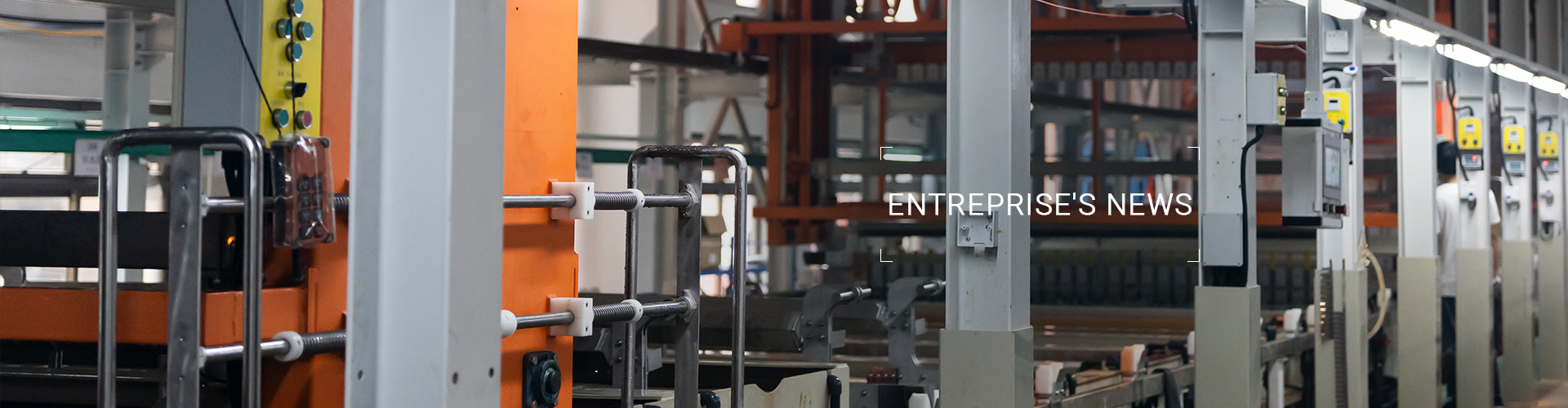
Rough Analysis of Investment Costs and Actual Energy-Saving Effects of Fully Automatic Oxidation Production Lines
For many small and medium-sized manufacturing enterprises involved in surface treatment, deciding whether to invest in a fully automatic oxidation production line is a critical strategic choice requiring precise calculation. The core of this decision lies in clarifying the balance between the one-time investment cost and the long-term operational energy-saving returns, an economic equation whose value is becoming increasingly pronounced with technological advancement and rising energy costs.
Initial Investment Cost Composition and Market Range
The investment for a fully automatic oxidation production line is not a fixed figure; it varies significantly based on the degree of automation, production capacity, configuration grade, and environmental requirements. The cost primarily consists of three major parts: the equipment main body and core systems, utility and environmental protection support, and installation, debugging, and plant adaptation. The equipment main body and core systems constitute the largest cost component, including the hoist system, a full set of process tanks, and an advanced central control system. The core equipment cost for a standard-configuration line meeting the production needs of a medium-sized enterprise often starts at over one million Chinese Yuan. Utility and environmental protection support include high-power rectifier power supplies, chiller units, circulation and filtration systems, and exhaust gas and wastewater treatment systems. This part of the investment is essential for ensuring stable production and regulatory compliance but is often underestimated in initial assessments. Furthermore, professional installation, months of debugging, and necessary modifications to the factory's electrical capacity, floor loading, and other conditions to support operation also represent a significant hidden cost.
Pathways and Quantitative Analysis of Energy-Saving Effects
The counterpart to the investment cost is the systematic, multi-layered energy-saving benefit generated by the fully automatic production line during long-term operation. In terms of direct energy savings, integrating intelligent control systems and variable frequency technology enables precise management of major power-consuming units such as fans and water pumps, potentially reducing unit product electricity consumption by 15% to 30% compared to traditional methods. For water resource utilization, automated control allows for refined rinsing processes and closed-loop circulation. Advanced technologies like countercurrent rinsing and wastewater recovery can elevate the water recycling rate to very high levels, significantly reducing freshwater consumption and wastewater treatment volume. Regarding thermal energy, production lines can more readily be equipped with waste heat recovery devices, using process residual heat for preheating, thereby reducing steam or gas consumption.
Beyond the reduction in direct energy consumption, indirect efficiency gains and loss reduction form another crucial source of benefits. Fully automatic operation means that only a few personnel monitoring from a central control room can replace the multiple tank operators and hoist operators required for traditional lines. Against the backdrop of continuously rising labor costs, this saving increases year by year. Simultaneously, the automated control system ensures high consistency in process parameters, greatly reducing rejects and rework caused by manual operational variations, thereby saving material consumption such as aluminum and chemicals. Stable production also directly improves the consistency of product anodic film thickness, color, and corrosion resistance, lowering quality loss costs and enhancing market competitiveness.
Comprehensive Evaluation and Outlook on Return on Investment
In summary, investment in a fully automatic oxidation production line should be viewed as a strategic asset update. Although its initial investment is significantly higher than that of traditional semi-automatic or manual lines, the resulting comprehensive energy-saving benefits are multifaceted. A well-configured automatic line can not only achieve significant reductions in direct electricity, water, and gas consumption but also generate continuous savings and value in labor costs, material consumption per unit, product pass rates, and environmental compliance risks. Typical return on investment analyses show that the payback period for the incremental investment depends on the specific initial investment amount and the achievable range of comprehensive savings, with many cases indicating this period can be contained within a few years.
Therefore, for enterprises considering an upgrade, it is advisable to move beyond the traditional mindset focused solely on the equipment's sticker price and instead conduct a full lifecycle cost-benefit analysis. The focus should be on their own capacity requirements, process specificity, available factory infrastructure conditions, and local environmental policy trends. Through detailed, personalized diagnostics, the most practical automation upgrade plan can be developed. In today's irreversible wave of intelligent and green manufacturing, this investment is increasingly becoming a key step for enterprises to solidify their foundational manufacturing capabilities and move towards high-quality development.
Share to WeChat
×
 The browser's built-in sharing function is also very user-friendly~