Dongguan Precision Electronic Component Anodizing Case
Within Dongguan’s highly concentrated electronics manufacturing ecosystem, a technologically leading connector manufacturer encountered a critical bottleneck in its product advancement. As power density increased in 5G base station equipment and new energy vehicle electrical systems, the surface oxide films on its core aluminum alloy RF housings and high-voltage connectors were required not only to provide protection but also to possess excellent electrical insulation, stable dielectric constants, and resistance to high humidity and salt spray corrosion. Traditional anodizing processes struggled with these miniature components featuring deep holes and fine gaps, often resulting in uneven coating thickness, edge effects, or solution residue, leading to erratic electrical performance or failure. The client urgently needed a dedicated oxidation solution capable of precision control and ultra-clean production.
Dingli Technology’s engineering team positioned this project as a systems engineering endeavor involving the deep integration of process and cleanroom technology. The primary challenge was solving “micro-zone uniformity.” To address this, the project employed micro-arc oxidation and precision anodizing power supplies capable of outputting complex waveforms. Through microsecond-level pulse management and real-time feedback, the energy deposition of each pulse was precisely controlled, enabling synchronized and uniform film growth on the component’s surface, inner walls, and even threads. Concurrently, custom-designed conformal racks and shielding fixtures were created for each connector variant, effectively optimizing the electric field distribution around complex geometries, suppressing edge buildup at its source.
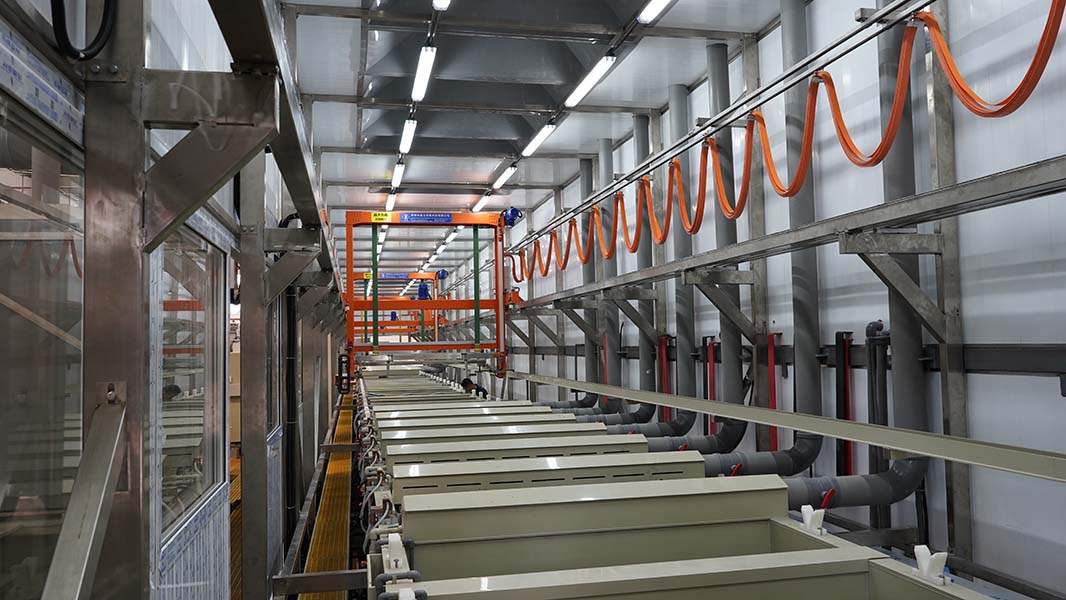
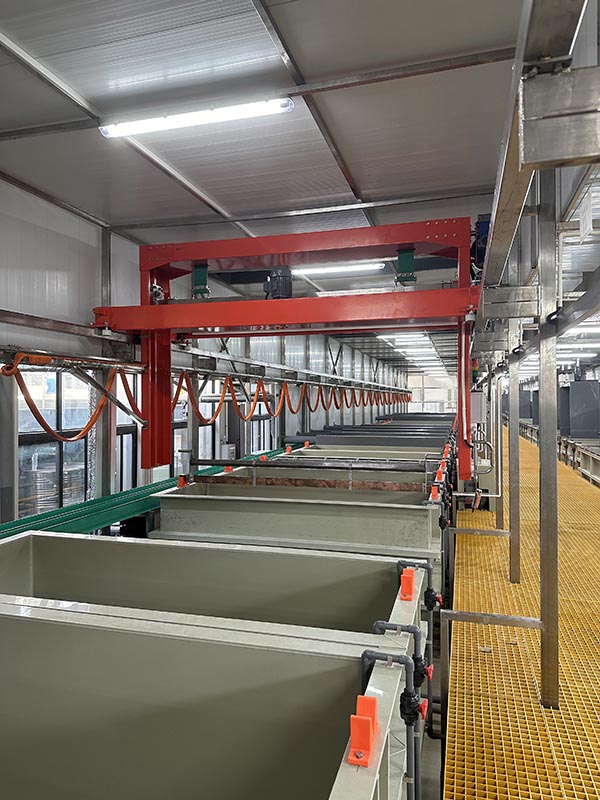
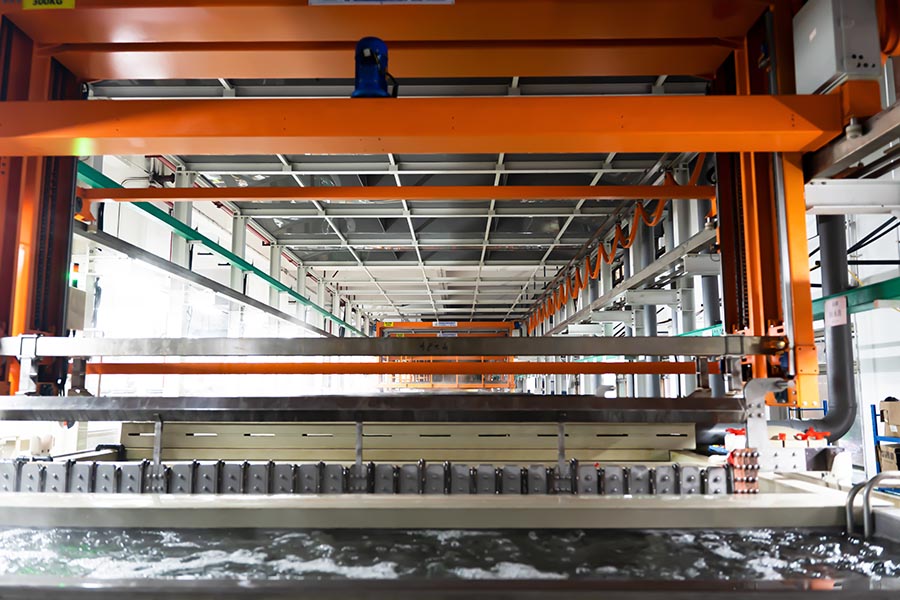
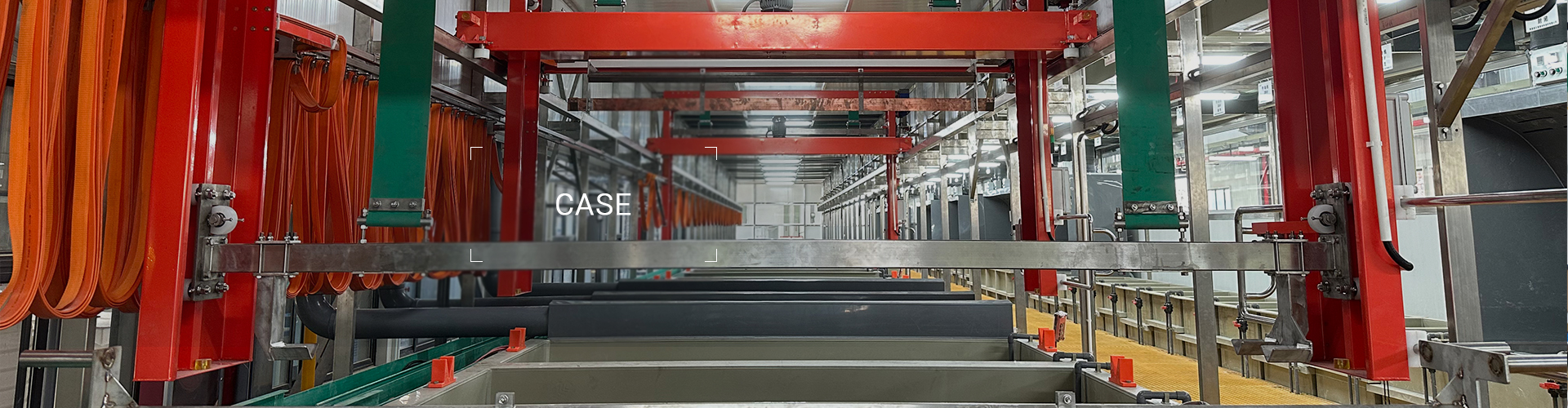
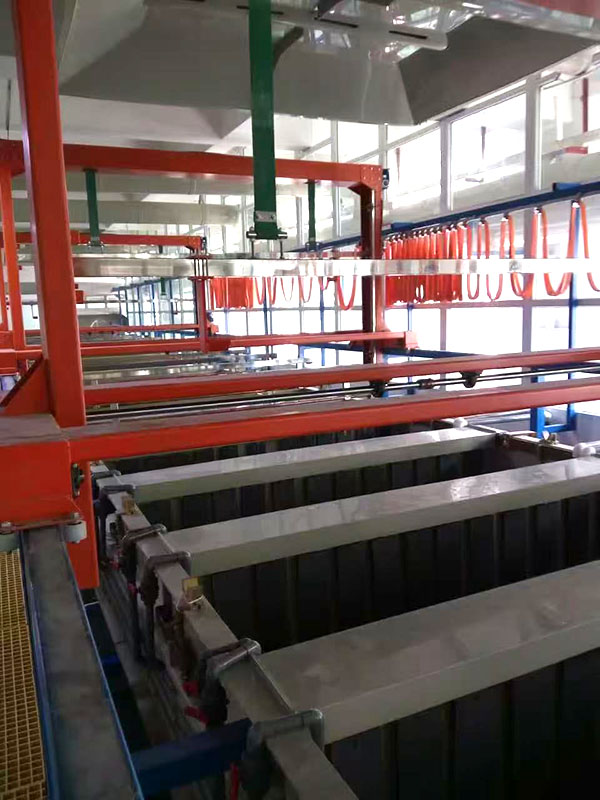
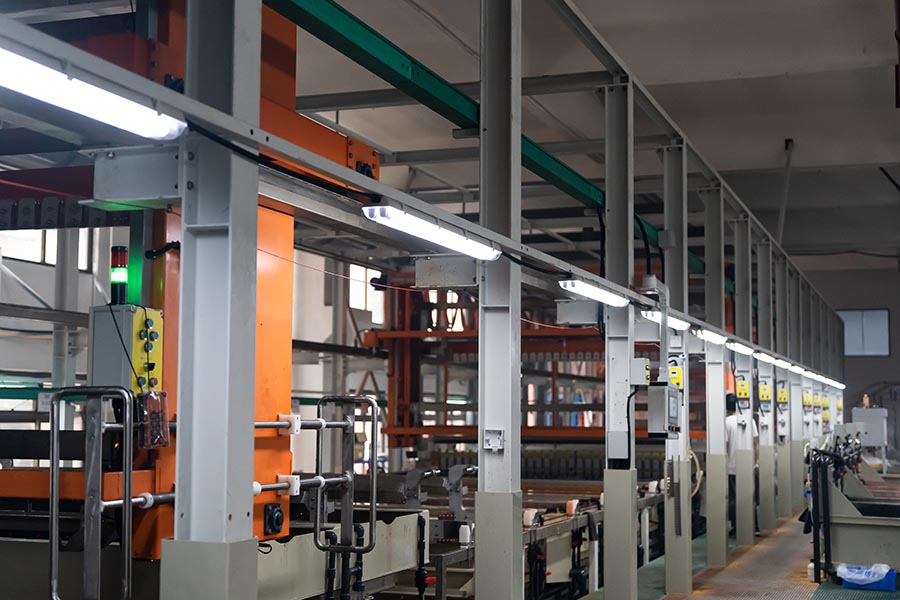
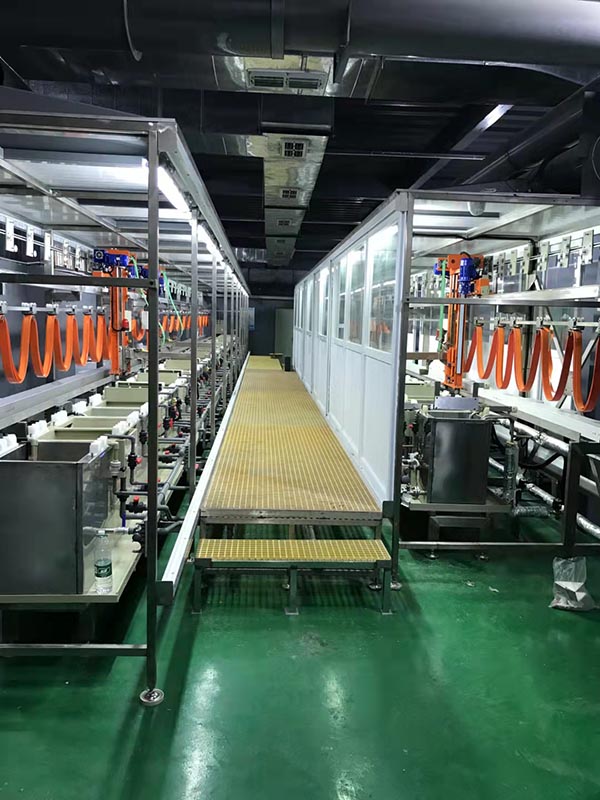
To achieve the ultra-clean and zero-contamination standards of electronics-grade manufacturing, the entire production line was housed within an enclosed cleanroom module. All tanks were constructed from high-grade, polished stainless steel with fully sealed circulation piping. Material transfer was accomplished using high-precision robotic arms and clean baskets, entirely eliminating the risk of particle shedding associated with traditional cranes. Process water was ultrapure with a resistivity up to 18.2 MΩ·cm, monitored by online particle counters. This environmental control system not only guaranteed the intrinsic quality of the oxide film but also ensured exceptional surface reliability for subsequent soldering and assembly processes.
The successful project implementation delivered quantifiable leaps in quality and market competitiveness for the client. The processed precision connectors exhibited an order-of-magnitude improvement in insulation resistance and significantly enhanced dielectric breakdown strength, performing far beyond expectations in Highly Accelerated Stress Testing (HAST). Crucially, the production line achieved near-part-per-million (PPM) levels of particulate control and 99.8% batch-to-batch consistency, resulting in a historic breakthrough in yield rates. This enabled the client to successfully qualify as a supplier for several global leading communication equipment and automotive electronics manufacturers, marking a critical transition from a prominent local enterprise to a core player in the international high-end supply chain.
This case demonstrates that for precision electronic components fundamental to system performance, surface treatment is no longer merely an ancillary process but a core technological determinant of the final product’s success. By providing cutting-edge, highly tailored oxidation solutions that deeply align with electronics manufacturing standards—transcending mere standardization—Dingli Technology has helped its partner build a formidable technological moat.
Share to WeChat
×
 The browser's built-in sharing function is also very user-friendly~